Pirate Terminology | A Complete Glossary of Pirate Words & Phrases
Table of Contents
- Key Takeaways
- What Is Pirate Terminology?
- Common Pirate Words and Their Meanings
- Pirate Vocabulary You’ll Hear at Sea
- Classic Pirate Phrases and Sayings
- Nautical Slang That Shaped Pirate Language
- How to Use Pirate Lingo in Everyday Conversation
- Pirate Speech in Pop Culture and Parties
- Final Thoughts
- Frequently Asked Questions About Pirate Terminology
Key Takeaways
- Language Origins: Pirate terminology combines real maritime language with expressive slang shaped by life at sea.
- Modern Influence: Much of what people recognize as pirate speech today comes from storytelling, films, and themed entertainment.
- Practical Use: Pirate words and phrases are easy to use and can enhance conversations, events, and interactive party experiences.
Pirate terminology is a mix of practical seafaring language and colorful expressions that have stood the test of time. From ship commands to playful phrases, these words offer a glimpse into life on the water while continuing to entertain people today. Whether used for storytelling, themed events, or casual fun, pirate language adds personality and energy to any setting.
At Night of Mystery, we specialize in creating immersive party experiences that bring themes like this to life. Our mystery games are designed to be easy to host and engaging for every guest, complete with a detailed host guide to keep the night moving, character descriptions for each participant, and printable invitations that can be sent digitally or hand-delivered. With carefully crafted scenarios and interactive gameplay, we help turn gatherings into memorable events.
What Is Pirate Terminology?
Pirate terminology refers to the distinctive words, phrases, and expressions associated with seafarers during the so-called Golden Age of Piracy. These terms were shaped by life at sea, naval traditions, and the diverse backgrounds of sailors who came from different countries and cultures. Over time, this shared way of speaking evolved into what many now recognize as classic pirate language.
Much of this terminology has roots in maritime communication. Sailors needed clear, direct ways to describe actions, roles, and conditions on a ship. Words like “starboard,” “bow,” and “aft” were not created for flair — they were essential for navigation and teamwork. Pirates adopted many of these same terms, blending them with slang and expressions that reflected their lifestyle.
It is also important to understand that the way pirates are often portrayed today is influenced heavily by literature and film. The exaggerated accents and phrases people associate with pirates, such as “Arrr” or “Ahoy,” were popularized long after the era of real pirates. While some expressions are historically grounded, others are part of a more theatrical version of pirate speech that continues to entertain.
Today, pirate terminology lives on in storytelling, themed events, and interactive experiences. Whether you are learning the language for fun or planning a themed gathering, understanding these terms adds depth and authenticity. If you are looking to bring that energy into a celebration, this guide offers practical ways to incorporate pirate speech into your event.
Common Pirate Words and Their Meanings
Pirate terminology is filled with vivid, practical language that once helped crews communicate quickly and clearly at sea. While some words are still used in modern nautical contexts, others have taken on a more playful meaning through stories and themed events.
Here are some of the most recognized pirate words and what they mean:
- Ahoy: A greeting used to call out to other ships or crew members. It functioned much like saying hello, but with more projection across open water.
- Avast: A command meaning stop or pay attention. It was often used to halt an action immediately.
- Booty: Refers to treasure or goods taken during raids. This could include gold, cargo, or valuable supplies.
- Buccaneer: Originally referred to Caribbean hunters, but later became another term for pirates operating in that region.
- Deck: The flat surface of a ship where much of the daily activity took place.
- Helm: The steering area of the ship. Being “at the helm” meant being in control of direction.
- Jolly Roger: The iconic pirate flag, often black with a skull and crossbones, used to intimidate other ships.
- Keelhaul: A harsh punishment where someone was dragged under the ship’s hull. While dramatic, it reflects the strict discipline sometimes enforced at sea.
- Matey: A friendly way to refer to a companion or fellow sailor.
- Plunder: To steal goods by force, often used interchangeably with booty but more focused on the act itself.
- Scallywag: A term for a mischievous or untrustworthy person, often used jokingly today.
- Shiver me timbers: An exclamation of surprise or shock, later popularized in fiction rather than common historical use.
These words form the foundation of pirate terminology and continue to shape how people imagine pirate speech today. Understanding them makes it easier to follow stories, join in themed events, or simply have fun with the language.
Pirate Vocabulary You’ll Hear at Sea
Pirate vocabulary is rooted in the practical demands of life aboard a ship. These were not decorative expressions but essential terms used to give directions, manage tasks, and keep the crew working in sync. Clear communication was critical, especially in high-pressure situations where quick decisions could determine the ship’s safety and everyone on board.
Many of these terms describe specific parts of a vessel or positions in relation to it. Words like bow and stern identify the front and back of the ship, while port and starboard replace left and right to avoid confusion during navigation. Other terms, such as crow’s nest, rigging, and galley, refer to key areas and functions on board, each playing an important role in daily operations.
Additional vocabulary focused on maintenance, movement, and storage. The hold stored cargo and supplies, the bilge collected unwanted water that had to be managed, and the anchor kept the ship steady when needed. Together, these terms show how pirate vocabulary developed from necessity, creating a shared language that helped crews operate efficiently at sea — and that still adds authenticity to pirate-themed storytelling and parties today.
Classic Pirate Phrases and Sayings
Classic pirate phrases bring personality and expression to pirate terminology, capturing how sailors communicated emotion, urgency, and camaraderie at sea. Some of these sayings were practical, while others gained popularity through storytelling and performance. Here are some of the most well-known pirate phrases and what they represent:
Ahoy, Matey
A friendly and attention-grabbing greeting used when addressing fellow sailors or nearby ships. It combines a call (“Ahoy”) with a casual term for a companion (“matey”), making it both practical and personable.
Avast Ye
A command meaning stop, listen, or pay attention. It was often used in moments that required immediate focus, especially when conditions were changing or important instructions were given.
All Hands on Deck
This phrase called every crew member to action. It signaled urgency and was typically used during storms, battles, or any situation where full participation was necessary.
Dead Men Tell No Tales
A phrase tied more to pirate lore than daily speech, suggesting secrecy and finality. It reflects the dramatic reputation pirates carried, especially in stories and legends.
Shiver Me Timbers
An exclamation used to express surprise or shock. While widely recognized today, it became popular through fictional portrayals rather than common historical use.
Yo Ho Ho
A rhythmic, chant-like phrase often associated with pirate songs and storytelling. It captures the theatrical side of pirate speech and continues to appear in modern depictions.
If you love the idea of bringing these classic phrases to life at a party, check out our guide on how to talk like a pirate at a party for tips, tricks, and vocabulary your guests will love.
Nautical Slang That Shaped Pirate Language
Nautical slang played a major role in shaping pirate terminology, blending formal seafaring language with more casual, expressive speech. These terms often developed from daily routines on ships and were adapted over time to reflect the personalities and conditions of life at sea. Some of the most recognizable pirate expressions have their roots in this practical yet colorful slang:
Aye Aye
A response meaning “I understand and will carry out the order.” It was more than just agreement; it confirmed both comprehension and action.
Batten Down the Hatches
A command to secure the ship before a storm. It meant closing and fastening all openings to prevent water from entering below deck.
Three Sheets to the Wind
A phrase used to describe someone who is unsteady or off balance, often due to drinking. It comes from loose sails, which cause a ship to sway unpredictably.
In the Same Boat
Originally, a literal expression referring to shared circumstances aboard a vessel. Over time, it came to mean being in the same situation as someone else.
Toe the Line
A phrase tied to discipline, where sailors had to stand with their toes against a seam in the deck. Today, it means following rules or meeting expectations.
Pipe Down
A signal for quiet, often played on a whistle or pipe to indicate it was time to settle down, especially at the end of the day.
How to Use Pirate Lingo in Everyday Conversation
Using pirate lingo in everyday conversation adds a playful twist to your communication, making interactions more engaging and memorable. It does not require memorizing long phrases — just a few well-placed terms can bring the spirit of pirate speech into casual settings. Here are simple ways to incorporate pirate lingo naturally into your conversations:
Start with Simple Word Swaps
One of the easiest ways to use pirate lingo is by replacing common words with pirate equivalents. Greeting someone with “Ahoy” instead of hello or calling a friend “matey” instantly adds character without complicating the conversation. These small changes are easy for others to understand and join in on.
Use Short Phrases for Expression
Incorporating short phrases like “Aye aye” to show agreement or “Avast” to grab attention can make your speech more dynamic. These expressions are quick, recognizable, and fit naturally into everyday dialogue without feeling forced.
Add Context for a Thematic Touch
For a more immersive feel, try using pirate phrases when they make sense. Saying “All hands on deck” when you need help or describing someone as “three sheets to the wind” adds humor and personality. If you are planning a pirate-themed gathering, our Talk Like a Pirate Day party guide has ideas to help pirate language feel natural and fun for your guests.
Pirate Speech in Pop Culture and Parties
Pirate speech has been shaped heavily by entertainment, evolving into a lively and recognizable way of speaking that goes beyond its historical roots. Films, books, and themed experiences have amplified certain phrases and accents, turning pirate language into something people actively recreate for fun. Today, it plays a key role in creating immersive and interactive party environments.
Much of what people recognize as pirate speech comes from fictional portrayals rather than real-life accounts. Popular media introduced exaggerated accents and phrases like “Arrr,” which have become widely accepted as part of pirate language. While not always historically accurate, these elements make pirate speech more engaging and accessible, especially in social settings.
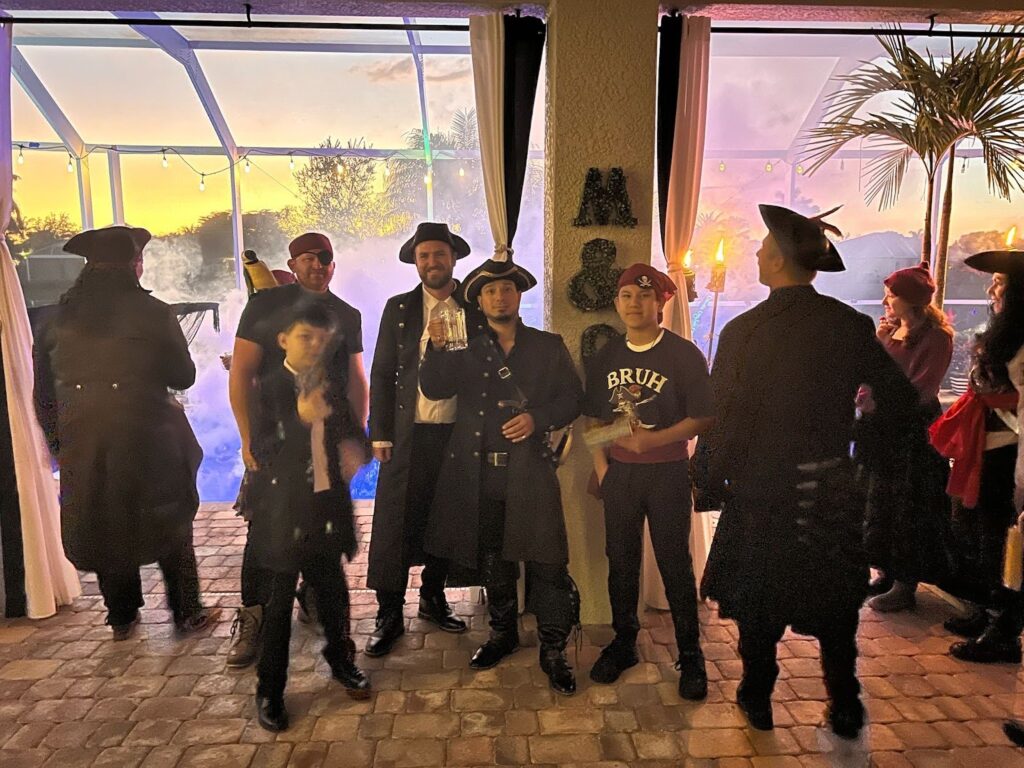
This theatrical version of pirate language fits naturally into themed parties, where guests can step into character and participate more freely. A pirate-themed murder mystery party takes this to another level entirely — combining dialogue, storytelling, and interaction so every guest has a role to play and a reason to mingle. With a detailed host guide to keep the night moving, character descriptions for each player, and invitations that can be sent digitally or hand-delivered, the whole experience is designed to feel exciting without being complicated to host. Want to see what a real pirate mystery party looks like in action? Check out this Murder Among the Mateys party of the month for serious decoration inspiration!
Final Thoughts
Pirate terminology continues to capture attention because it blends history, storytelling, and a sense of adventure. While some terms come directly from life at sea, others have been shaped by generations of books, films, and shared traditions. Together, they form a language that feels both authentic and entertaining.
Understanding pirate words and phrases adds depth to themed experiences, conversations, and events. It allows you to move beyond surface-level references and create something more engaging — whether you are learning for fun or planning a gathering. Even a few well-chosen terms can make a noticeable difference in how the theme comes to life.
Whether you are exploring the origins of pirate language or using it to set the stage for a killer party, these expressions offer a simple and fun way to connect people through shared creativity. With the right mix of terminology and imagination, pirate speech becomes more than just words — it becomes part of the experience itself.
Frequently Asked Questions About Pirate Terminology
What is the difference between pirate terminology and nautical terms?
Pirate terminology includes both formal maritime language and informal expressions. Nautical terms are strictly functional, while pirate terminology often includes slang and personality-driven phrases.
Did real pirates actually speak the way they are portrayed today?
Not exactly. Real pirates used practical maritime language, but the dramatic accents and phrases commonly heard today were largely shaped by literature and film.
Why is pirate terminology still popular today?
It remains popular because it ties into storytelling, entertainment, and themed events. The language is easy to adopt and adds a sense of fun and immersion.
Are pirate terms the same across all regions?
No, pirate language varied depending on where sailors came from. Different regions influenced vocabulary, accents, and expressions used at sea.
Is pirate terminology difficult to learn?
Not at all. Most pirate terms are simple and easy to remember, especially since many are still used or have been adapted into modern language.
What are some historically accurate pirate terms?
Terms like “helm,” “port,” “starboard,” and “anchor” are historically accurate and still used in maritime contexts today.
Can pirate terminology be used in educational settings?
Yes, it can be a fun way to introduce maritime history, language evolution, and cultural storytelling.
How does pirate terminology enhance themed events?
It helps create a more immersive atmosphere by encouraging guests to interact in character and engage more deeply with the theme.
Are pirate phrases suitable for all ages?
Yes, most pirate terminology is family-friendly and can be adapted for kids, teens, or adults depending on the setting.
Where can I practice using pirate terminology?
You can practice through themed parties, games, or even casual conversations with friends who enjoy the same style of playful language.